Arborvitae Tree Care, Pruning Tips, Signs of Diseases or Other Problems
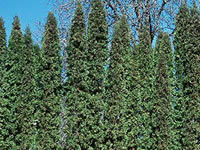 A dense, narrow, evergreen shrub or small tree, arborvitae makes a wonderful privacy screen and windbreak. The shape of an arborvitae tree varies depending on cultivar. An American arborvitae tree is full and cone shaped. The Globe arborvitae tree is broad and spherical while the Pyramidal arborvitae is a taller, thinner variety. Arborvitae can also be pruned into various ornamental hedges or grown in containers. They are however, a favorite delicacy of deer.
How to Grow an Arborvitae Tree: Arborvitaes are hardy trees that require little maintenance and grow well in part or full sun. They can be planted at any time of the year, except during summer drought conditions. Arborvitae trees prefer cooler climates and moist, alkaline soil, but can adapt to other soil types.
Size of an Arborvitae Tree: Arborvitae ranges in height from 20-30 feet high / 12 foot spread depending on species.
If you’d like to establish arborvitae in your landscape, we can help. We have access to professional, and vetted, landscapers that can help you select, purchase and plant new arborvitae trees. For a complimentary consultation with one of our certified arborist to discuss the arborvitae varieties suitable for your landscape, contact our location nearest you.
Arborvitae Tree Care
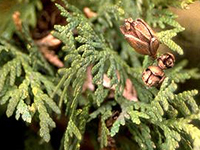 Tree pruning, watering, and using arborvitae tree fertilizer on a regular basis will keep your arborvitae tree as healthy as possible.
Newly planted arborvitae trees will benefit from ArborKelp®, SavATree’s exclusive seaweed biostimulant which aids in tree establishment, promotes root growth and heightens stress tolerance.
Mature and established arborvitae trees benefit from fertilizer feedings of organic-based macro and micronutrients for the nutrition necessary to sustain their health.
Arborvitae Tree Pruning
 Pruning arborvitae trees will maintain the desired shape and height, and help rejuvenate older plants.
Tree pruning is recommended to preserve or improve arborvitae tree structure, vigor and life-span. Pruning can reduce specific defects or structural tree problems to greatly lessen the risk of failure.
Broken, diseased, or dead branches are typically removed from the arborvitae tree in order to prevent decay-producing fungi from infecting other areas of the tree.
Removal of live branches from the arborvitae tree is occasionally necessary to allow increased exposure to sunlight and circulation of air within the canopy. This assists in reduction of certain tree diseases. We also advocate the removal of branch stubs to promote successful and proper healing of wounds.
Your SavATree certified arborist is equipped with the latest techniques and state-of-the-art equipment to keep your arborvitae healthy, beautiful and safe. Contact us today for information on arborvitae tree pruning or any of our other arborvitae tree care services.
Arborvitae Diseases, Pests & Signs of Problems
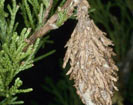
There are several damaging arborvitae tree diseases and pests. Some of the most common problems are:
- Bagworm – Bagworm is a type of moth whose caterpillars feed voraciously on arborvitae leaves and twigs. Signs of bagworm include defoliation and characteristic 2″ long bags of tough silk that hang like an ornaments from the tree’s branches. A bagworm infestation can cause severe defoliation which can retard the growth of the tree and make the tree vulnerable to secondary pests.
- Spider Mites – These pests can cause arborvitae leaves to gray or brown.
- Aphids – Aphids suck the sap from the arborvitae, retarding the tree’s growth and can cause leaves to yellow, brown or wilt.
- Tip Blight – Tip blight is caused by the fungus Pestalotiopsis funerea. Trees that have problems with insects, sun scorch or freeze injuries are most susceptible to this fungus. Look for brown or tan twig tips and black string-like spores emerging from the dead leaf tissue.
Other arborvitae tree diseases and pests include:
- Canker
- Molds & mildews
- Sun scorch
Many of these insect and disease conditions can weaken the tree and lead to tree death if not treated. If you suspect a problem with your trees, call a SavATree certified arborist right away for an evaluation and treatment options. Our arborvitae tree care experts can help protect your trees and keep your landscape beautiful.
Diseased photo: Arborvitae disease -1431047 bagworm by Lacy L. Hyche, Auburn University, Bugwood.org